
HIGH IMPACT PRESENTATIONS.

During our course we covered a great deal of ground together — from the psychology of how audiences actually receive and remember information, to the architecture of a message that moves people, to the design principles that make visual communication work, to what happens in the room when you stand up and speak.
What you have now is not a collection of tips. It is a coherent framework for thinking about communication — one that you can apply to every presentation you give from here on, regardless of the context, the audience, or the stakes.
The material in this page is yours to keep and return to. The books will take you deeper into the ideas that resonated most. The slides are your reference when you are preparing something important.
But the most valuable thing you can do now is use it. The next presentation you give — however routine it might seem — is an opportunity to apply one thing you learned here. Then the next one, another thing. That is how the shift happens: not in a single breakthrough moment, but in the accumulation of small, deliberate choices made differently each time.
CONTENTS WE COVERED.
-
Most presentations fail not because the content is poor but because the presenter designed it for themselves rather than for the audience. The Curse of Knowledge explains why expertise creates distance — the more you know about a subject, the harder it becomes to remember what it felt like not to know it. We also looked at cognitive load, what the brain actually responds to, and what separates a forgettable presentation from one that genuinely changes something in the room.
Next time you prepare: before you build anything, ask yourself what needs to change in the audience's mind by the end. Start there, not with the slides.
-
The audience is the hero of the presentation — not the presenter. The single most common mistake is designing a presentation around what the presenter wants to say rather than what the audience needs to receive. This module is about building a genuine picture of who is in the room — their existing beliefs, their knowledge gaps, their motivations, their fears, and what is genuinely in it for them. We also looked at six cognitive biases that systematically shape how any audience receives a message: confirmation bias, the halo effect, the framing effect, anchoring, the availability heuristic, and loss aversion.
Next time you prepare: spend as much time understanding your audience as you spend on your content. Profile them before you touch a slide.
-
A presentation without a clear central message is just organized information. This module is about finding the one thing — the Big Idea — that everything else exists to support. We worked through the architecture of a message that lands: how to build a narrative arc, how to make abstract ideas concrete and human, and how to apply the SUCCESs framework — Simple, Unexpected, Concrete, Credible, Emotional, and Story — to ensure that what you say not only reaches the audience but stays with them.
Next time you prepare: write your Big Idea in one sentence before you do anything else. If you cannot do it in one sentence, the thinking is not finished yet.
-
Good content fails without the right container. The way ideas are sequenced — what comes first, what comes last, what sits at the peak — determines whether the audience builds understanding progressively or gets lost in the middle. This module looked at how the brain processes sequences, why beginnings and endings carry disproportionate weight, how emotional contrast sustains attention, and how to give the audience a map so they always know where they are and where they are going.
Next time you prepare: map your structure on paper before opening the software. See the whole before you build the parts.
-
Slides are not documents. The single most damaging habit in professional presenting is designing slides that try to do both jobs at once — visual support during the presentation and complete reference document afterward. This module is about the psychology of visual perception, the four design principles that govern how the eye moves and how the mind organizes what it sees, and the discipline of making every element on a slide earn its place. Signal versus noise. Empty space as a design tool. The power of a face. The picture superiority effect. Color, typography, and visual hierarchy.
Next time you design: ask of every element on every slide — is this serving the audience's understanding, or is it here for another reason? If the answer is the latter, remove it.
-
You are the presentation. The slides are the support — you are the event. This module is about everything that happens when a human being stands in front of other human beings and speaks: presence, voice, body language, eye contact, passion, connection, pace, the PUNCH framework for openings, the S.T.A.R. moment, and how to close so the audience carries something out of the room. It also covers the communication fundamentals that underpin every live interaction — active listening, empathy in action, full attention, and how to adapt in real time to what the room is telling you.
Next time you present: prepare your opening and your closing with as much care as your content. The beginning and the end are what people remember.
-
Anxiety before a presentation is not a character flaw or a sign of poor preparation. It is the autonomic nervous system doing exactly what it was designed to do. This module is about understanding what happens physiologically when you stand up to speak, and how to use that knowledge to your advantage. The relationship between body and mind runs in both directions — your physical state shapes your emotional state as much as the other way around. Breathing, posture, pace, and the direction of your attention are not just delivery details. They are tools for managing the internal experience of presenting in real time.
We also looked at emotional intelligence as a professional competency — self-awareness, self-regulation, reading the room, and responding to what you find there. And at Lisa Feldman Barrett's theory of constructed emotion: the idea that the anxiety you feel about presenting is not fixed or inevitable. It is a prediction built from past experience — which means that as the experience changes, the prediction changes with it.
Next time you present: arrive early, breathe deliberately, and direct your attention toward the audience rather than toward yourself. The feeling follows the behavior, not the other way around.
COURSE PRESENTATION.
All the content from the sessions is available here — the full presentation with notes for each slide. Use it as a reference when you are preparing your next presentation, to revisit a concept that stayed with you, or to go deeper on something you want to apply.
ONLINE SESION WITH ME.
These sessions are an optional space to continue the work from the course. If you want to go deeper on a specific concept, think through a real situation you are facing, or need support putting something into practice, this is where that happens. The goal is to help you bring what you learned into your actual work — with more clarity, more confidence, and a clearer sense of how to apply it.
SOME RECOMENDATIONS.
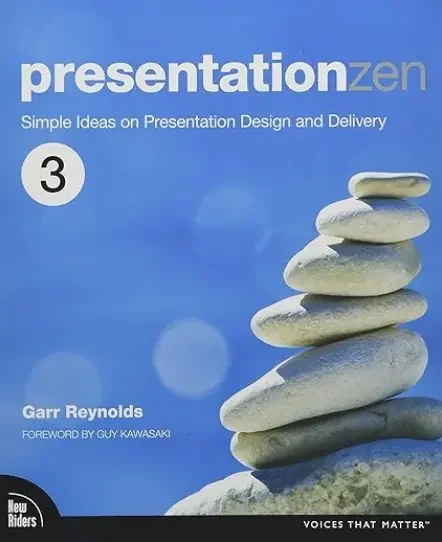
Reynolds makes the case that the way most professionals present is not just ineffective — it is the opposite of what communication requires. Drawing on Zen principles of simplicity, restraint, and presence, he argues that the best presentations are built on clarity of thought, not density of information. His main contribution to this course is the philosophy behind the slides: that a presentation is a human event, not a document delivery, and that everything on screen should serve that event rather than replace it.
Presentation Zen - Garr Reynolds.
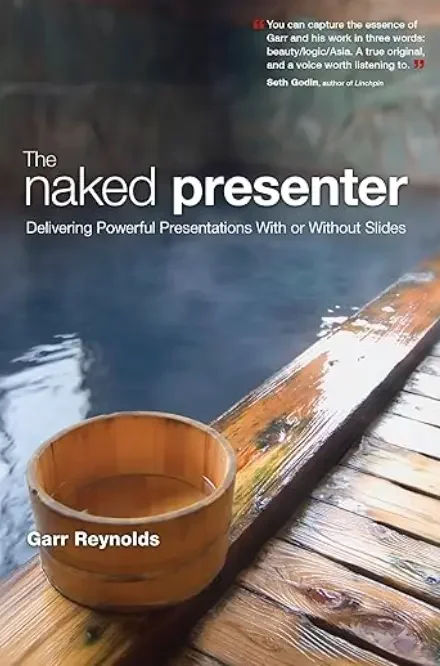
A companion to Presentation Zen focused entirely on delivery — what happens when you are actually in the room. Reynolds explores presence, naturalness, connection, and the courage to present without hiding behind slides or scripts. The title captures the central idea: the most powerful thing a presenter can do is be genuinely themselves, fully prepared and fully present, with nothing between them and the audience. Directly applicable to everything in the delivery module.
The naked Presenter - Garr Reynolds.
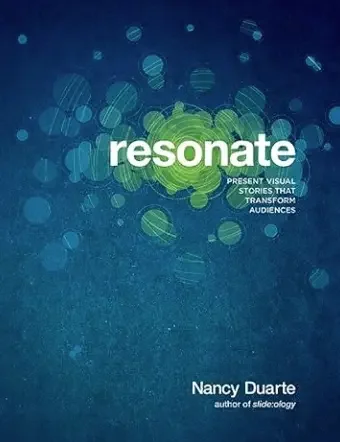
Duarte analyzed some of the most influential presentations and speeches in history and found a consistent pattern: the best communicators structure their message as a continuous movement between what is and what could be. This contrast — the gap between current reality and future possibility — is what creates the emotional energy that moves audiences to act. Resonate is the most directly applicable book in this course for anyone who needs to persuade, inspire, or drive change through a presentation.
Resonate - Nancy Duarte.
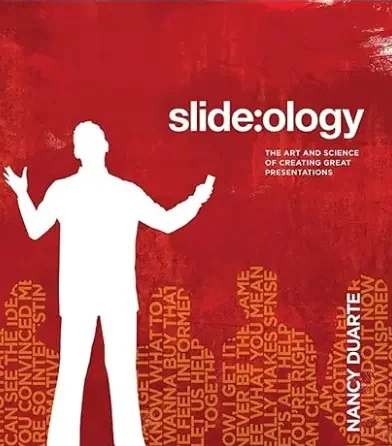
Where Resonate is about the story, Slide:ology is about the visual expression of that story. Duarte breaks down the principles of slide design with the rigor of a designer and the clarity of a communicator. The book covers visual thinking, the relationship between ideas and images, data visualization, and the discipline of making every element on a slide earn its place. Essential reading for anyone who wants to move beyond bullet points and templates.
Slide:ology - Nancy Duarte.

The Heath brothers spent years studying why some ideas survive and others disappear — why urban legends spread while important messages are forgotten, why some presentations change behavior and others leave no trace. Their answer is the SUCCESs framework: messages that stick are Simple, Unexpected, Concrete, Credible, Emotional, and told as Stories. The book is both a diagnosis of why most professional communication fails and a practical toolkit for fixing it. One of the most directly useful books ever written for anyone who needs to communicate ideas clearly.
Made to Stick - Chip and Dan Heath.
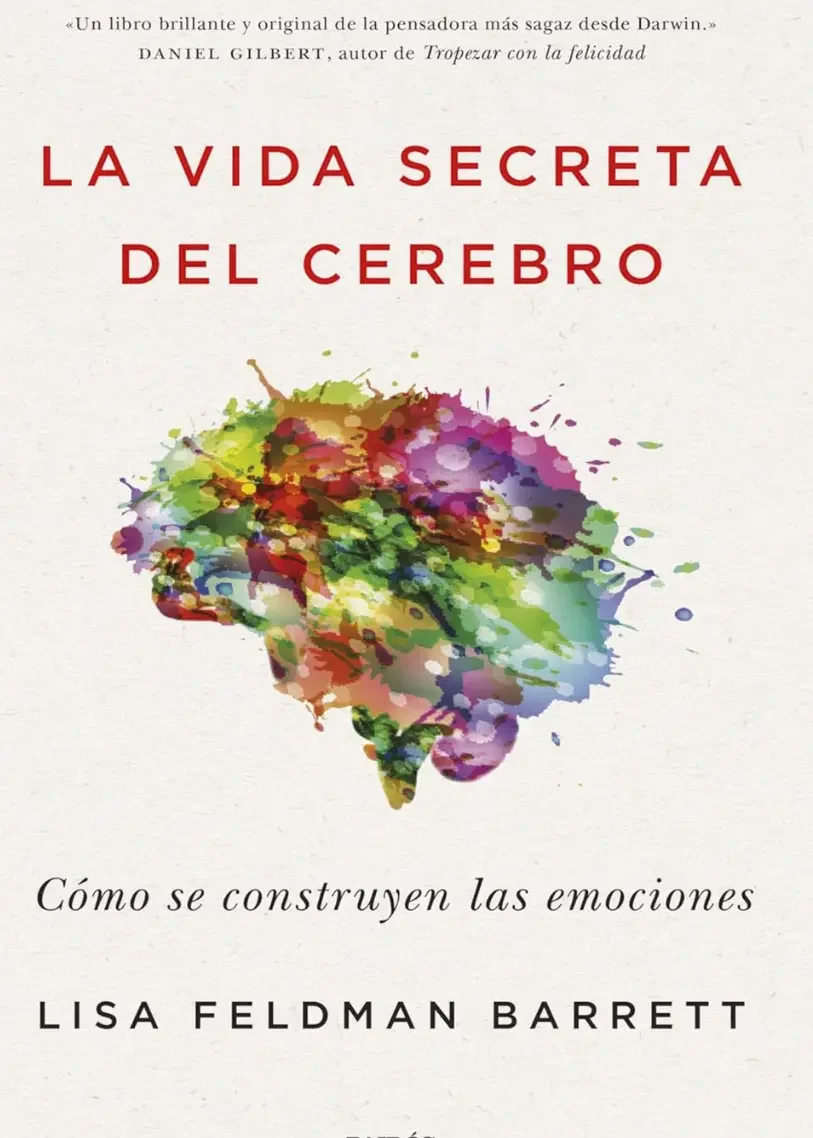
Barrett is one of the most important neuroscientists working today, and her central argument overturns a widely held assumption: emotions are not hardwired reactions that happen to us. They are constructed by the brain — predictions generated from past experience, current context, and the concepts available to make sense of what we are feeling. For this course, her work is particularly relevant in understanding why anxiety about presenting is not fixed or inevitable. As the concepts you have about presenting change, the emotional experience the brain constructs around presenting changes with it.
The Secret Life of the Brain — Lisa Feldman Barrett.
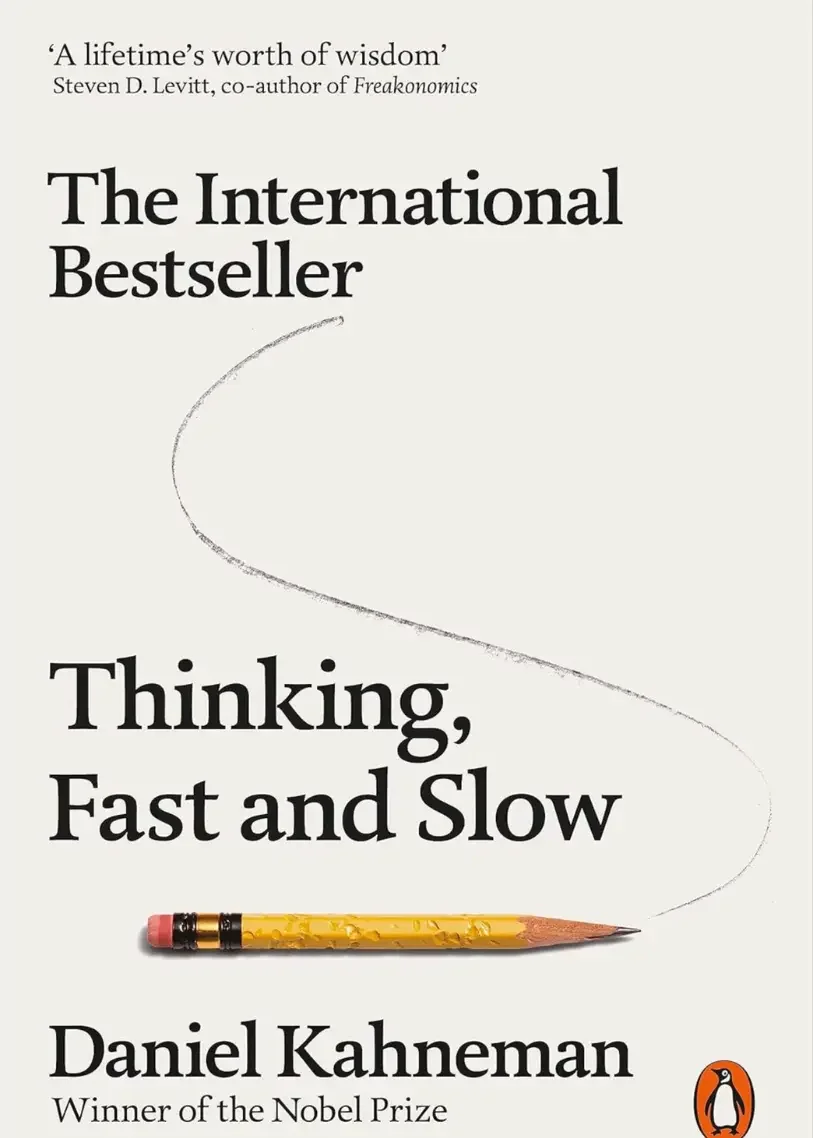
Kahneman spent decades studying how human beings actually make decisions — and his conclusion is that we are far less rational than we believe. The brain operates through two systems: a fast, automatic, intuitive system that makes rapid judgments based on pattern and feeling, and a slow, deliberate, analytical system that requires effort and attention. Most professional presentations are designed entirely for the slow system — logical, sequential, evidence-based. But it is the fast system that decides whether to pay attention, whether to trust the presenter, and whether to act on what was said. Understanding both systems is essential for anyone who wants their message to actually land.
Thinking Fast and Slow — Daniel Kahneman